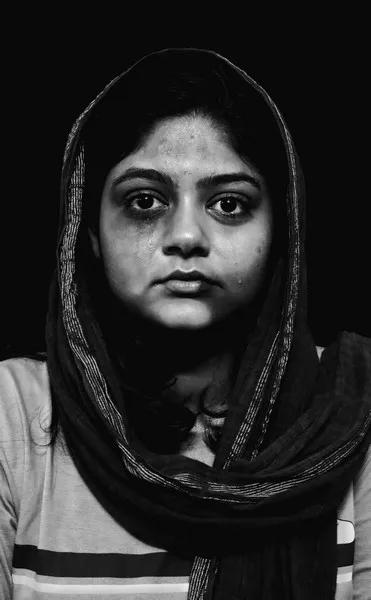

An honour killing is the murder of a person — most often a woman or girl — by a family member or community member who believes that the victim has brought shame or dishonour upon the family, typically through perceived sexual or social transgression.
Honour killings represent one of the most extreme intersections of gender inequality, cultural norms, and violence that sociologists study. They are not random acts of passion. They are structured, socially sanctioned responses to a perceived breach of honour — a concept so deeply embedded in certain cultures that its protection is considered more important than human life. Understanding honour killings sociologically means asking not just who commits them, but why entire communities sometimes tolerate, justify, or even demand them. That question takes us into the heart of how societies control behaviour, construct gender, and enforce conformity.
What Are Honour Killings?
The term “honour killing” refers to an act of lethal violence carried out against someone — overwhelmingly female — who is judged to have violated the sexual or behavioural codes of their family or community. The violation might involve having a relationship outside marriage, seeking a divorce, refusing an arranged marriage, being a victim of rape (which is, in these contexts, treated as the woman’s fault), or even behaving in a way considered too independent or Western. In each case, the logic is the same: the individual’s behaviour has damaged the collective reputation of the family, and only the killing of the offending person can restore it.
It is important to note that the term “honour” here is a sociologically specific concept. It refers not to personal virtue or integrity but to a form of social capital — a reputation for respectability that a family holds within a community. This distinction matters because it reveals that honour killings are fundamentally about social standing and patriarchal control, not about genuine moral principles. The “honour” at stake belongs not to the victim but to the men in her family.
Pierre Bourdieu, the French sociologist who transformed our understanding of how culture reproduces inequality, introduced the concept of social capital to describe the resources — including reputation, networks, and trust — that individuals and families accumulate within a social field. In communities where honour is a form of social capital, a woman’s sexual behaviour becomes property of the family. Her perceived transgression does not merely shame an individual; it depletes a resource the entire family depends on for marriages, alliances, business relationships, and standing in the community. This framing helps explain why honour killings are often collective decisions, involving multiple family members rather than a single perpetrator acting alone.
Examples of Honour Killings
Honour killings occur across a range of countries and communities, including parts of South Asia, the Middle East, North Africa, and among diaspora communities in Western Europe. They are not confined to a single religion, though they are disproportionately associated with conservative patriarchal interpretations of culture in predominantly Muslim-majority and some Hindu and Sikh communities. Sociologists are careful to stress that no religion sanctions honour killing as a theological requirement; rather, it is a cultural practice that sometimes draws on religious language for justification.
One widely cited case is that of Banaz Mahmod, a young Kurdish-Iraqi woman living in the United Kingdom who was murdered in 2006 on the orders of her father and uncle after she left an abusive arranged marriage and began a relationship with a man outside her community. Her case reached international attention partly because she had reported her fears to the police multiple times before her death, and her pleas were not taken seriously. The Banaz case illustrates a central sociological point: honour killings do not occur only in distant or non-Western societies. They occur wherever the cultural logic of honour-based violence is present, including in Western cities.
In Pakistan, thousands of cases are reported annually, though researchers widely acknowledge that the true figure is far higher because many killings are disguised as suicides, accidents, or are never reported at all. In Jordan and other parts of the Arab world, legislative frameworks have historically offered reduced sentences for honour killings, though legal reforms have been pursued in recent decades. In India, honour killings are associated particularly with caste-endogamy enforcement — the practice of requiring marriage within a caste — and are sometimes carried out by community tribunals known as khap panchayats. These examples demonstrate that while the specific cultural and legal contexts vary, the underlying social structure remains consistent: a patriarchal order in which women’s autonomy is treated as a threat to collective male honour.
Why Do Honour Killings Happen? A Sociological Explanation
To explain why honour killings happen, sociologists begin with the concept of patriarchy — a system of social organisation in which men hold structural power over women in political, economic, cultural, and domestic life. Sylvia Walby, a British sociologist known for her theorisation of patriarchy, identified it not as a single institution but as a set of interlocking social structures — including the household, employment, the state, male violence, sexuality, and culture — that together subordinate women. Honour killings are, from this perspective, the most extreme enforcement mechanism of patriarchal structures operating at the household and community level. They communicate to all women in a community that stepping outside the boundaries of approved behaviour carries lethal consequences.
Emile Durkheim, the nineteenth-century French sociologist considered one of the founding figures of the discipline, argued that all societies develop mechanisms of social control to enforce collective norms and punish deviance — behaviour that violates those norms. In Durkheim’s framework, deviance is not simply a private matter but a social event. The community’s response to deviance reaffirms the boundaries of acceptable behaviour and strengthens social cohesion among those who conform. Applying this to honour killings, the killing of a woman who has “transgressed” is not only punishing an individual; it is a public performance of communal norms, warning other women and reaffirming to men that the patriarchal order remains intact.
Michel Foucault, the French philosopher and social theorist whose work on power and discipline has been highly influential in sociology, argued that power operates not only through overt force but through surveillance — the awareness of being watched and judged. In his concept of the panopticon, Foucault described how systems of observation produce self-regulating subjects: people who modify their own behaviour because they know (or believe) they are being watched. Honour-based communities function in a similar way. Women in such communities know that their behaviour is constantly monitored by family members, neighbours, and the broader community. This constant surveillance disciplines women’s behaviour even before any violence occurs, making the threat of violence a permanent mechanism of control.
Gender, Power, and the Social Construction of Honour
Get the full article AD FREE. Join now for full access to all premium articles.
View Plans & Subscribe Already a member? Log in.