Easy Sociology

Easy Sociology

Easy Sociology is your go-to resource for clear, accessible, and expert sociological insights. With a foundation built on advanced sociological expertise and a commitment to making complex concepts understandable, Easy Sociology offers high-quality content tailored for students, educators, and enthusiasts. Trusted by readers worldwide, Easy Sociology bridges the gap between academic research and everyday understanding, providing reliable resources for exploring the social world.

Urban Ecology

A steamy urban skyline

Introduction to Urban Ecology Urban ecology is a subfield of sociology and environmental studies that examines the relationships between human populations and their urban environments. It explores how social structures, economic factors, political systems, and environmental processes interact within cities.…

Urban Agglomeration

A downtown urban area

Introduction Urban agglomeration is a defining feature of modern urbanization, encapsulating the concentration of economic, social, and infrastructural elements in a specific geographic region. As cities expand, they attract industries, labor forces, and cultural activities, fostering both economic growth and…

What is Typification?

An abstract image of pastel pinks and blues

Typification is a fundamental concept in sociology that helps us understand how individuals and societies categorize and make sense of the world. Rooted in the phenomenological tradition, typification explains how human beings use habitual patterns to interpret reality, interact with…

Neo-Darwinism

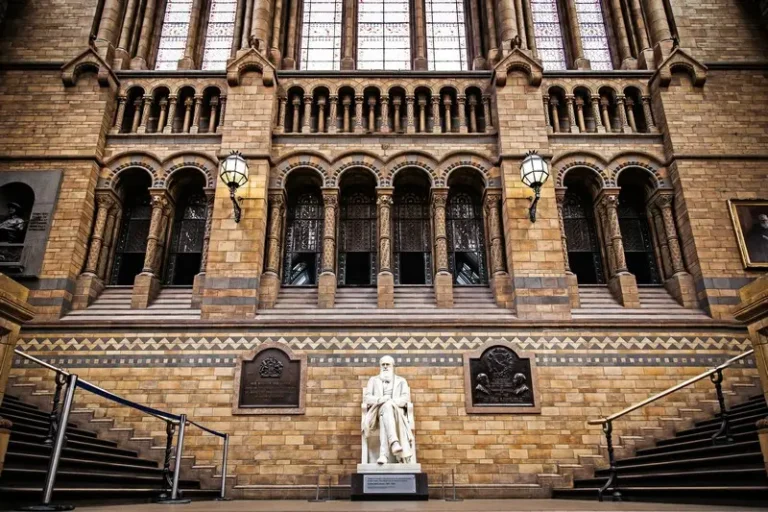
the charles darwin statue at london natural history museum

Neo-Darwinism is a term often used to describe the modern synthesis of Charles Darwin’s theory of evolution and the principles of genetics discovered by Gregor Mendel. It is a foundational concept in evolutionary biology but has far-reaching implications in the…

Neo-Kantianism

An abstract representation of a road

Neo-Kantianism is a significant intellectual movement that emerged in the late 19th century, primarily as a response to the perceived limitations of positivism and the burgeoning complexities of modern scientific and philosophical thought. Rooted in the works of Immanuel Kant,…

×