Easy Sociology

Easy Sociology

Easy Sociology is your go-to resource for clear, accessible, and expert sociological insights. With a foundation built on advanced sociological expertise and a commitment to making complex concepts understandable, Easy Sociology offers high-quality content tailored for students, educators, and enthusiasts. Trusted by readers worldwide, Easy Sociology bridges the gap between academic research and everyday understanding, providing reliable resources for exploring the social world.

Foucault’s Thinking on the Panopticon

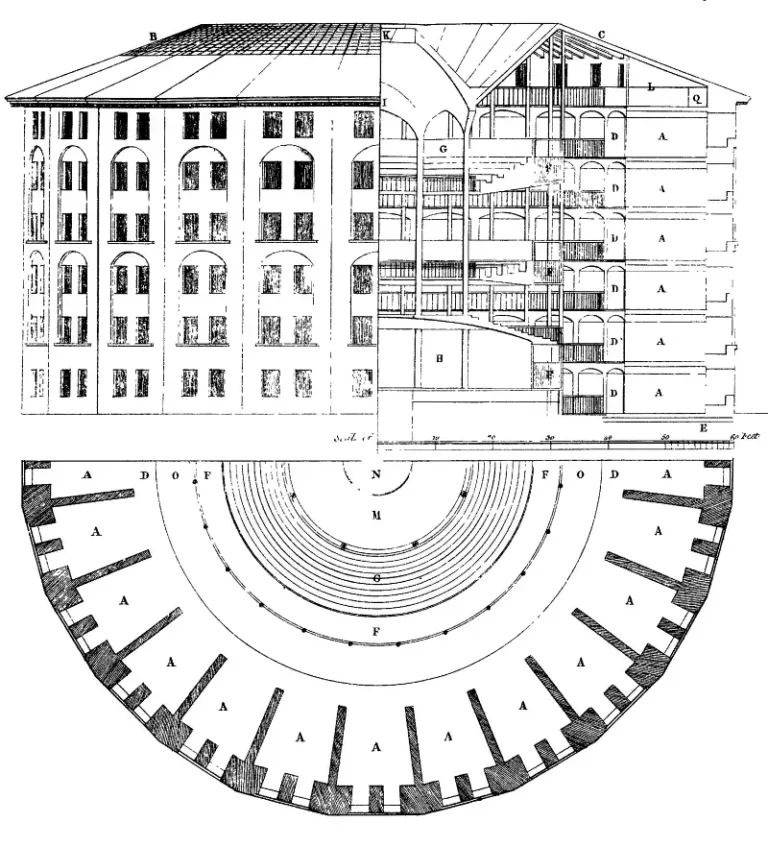
diagram of a panopticon prison

Learn about Michel Foucault's interpretation of the panopticon as a metaphor for modern disciplinary power. Discover the origins of the panopticon and how it extends beyond prisons to various aspects of society. Explore its application to modern society, the power dynamics it creates, and the potential for resistance and alternatives. Gain a critical perspective on power dynamics in our lives and explore ways to challenge and liberate ourselves from societal norms.

Who Was Michel Foucault?

michel foucault sat at a desk

Michel Foucault was a prominent French philosopher, social theorist, and historian of ideas. His work on power, knowledge, and discourse has had a profound impact on various academic disciplines. This blog post explores Foucault's key ideas, including his theories on power, the prison system, and the history of sexuality. It also discusses the criticisms and controversies surrounding his work. Despite his passing in 1984, Foucault's legacy continues to shape academic discourse and challenge established norms.

Foucault’s “Discipline and Punish”: A Summary

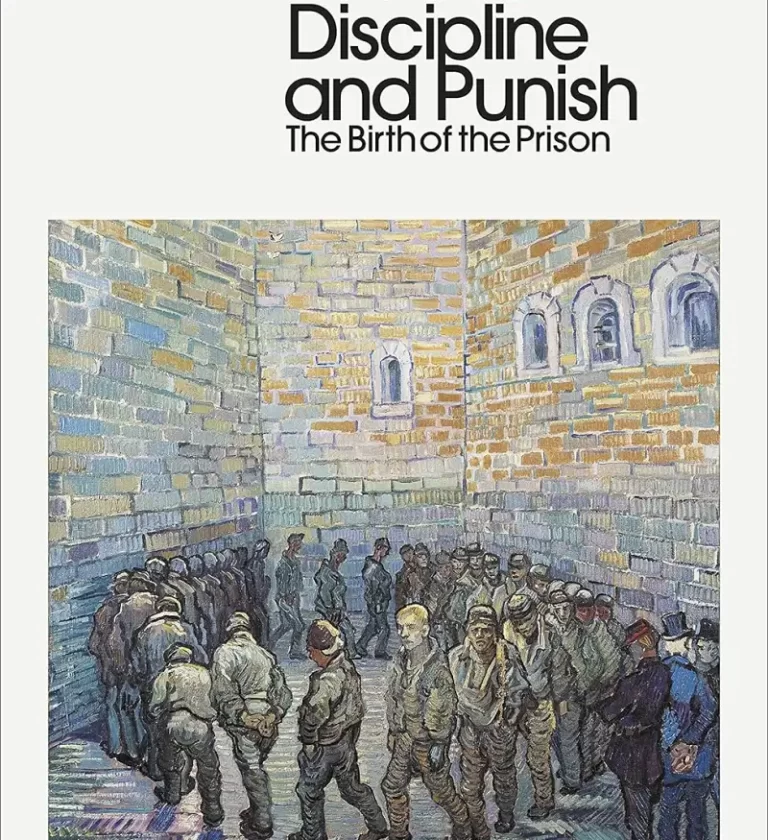
discipline and punish by michel foucault

Michel Foucault's "Discipline and Punish: The Birth of the Prison" is a seminal text in the field of sociology and critical theory, offering a profound analysis of the evolution of social control mechanisms, particularly focusing on the transition from corporal punishment to the modern prison system. Foucault's work, published in 1975, investigates how power operates within societies, emphasizing the role of discipline in shaping modern institutions and individuals. This summary will outline the main points of Foucault's argument, organized under various thematic headings.

Historical Context and the Shift in Punishment

The Spectacle of Punishment

Foucault begins "Discipline and Punish" with a graphic depiction of a public execution in 1757, illustrating the brutal and theatrical nature of corporal punishment in the pre-modern era. These spectacles served as a means of asserting sovereign power and deterring crime through fear and awe. The body of the condemned was the primary site of punishment, which was executed publicly to reinforce the authority of the


Understanding Foucault’s Concept of Docile Bodies

Michel Foucault

In this article, we explore Michel Foucault's concept of docile bodies and its implications in understanding power dynamics in society. Foucault argues that docile bodies are individuals who have been subjected to various techniques of discipline and control, resulting in their submission to authority and the normalization of their behavior. We delve into the role of disciplinary techniques and the implications of docile bodies for our understanding of power and social control. We also discuss resistance and subversion as avenues for challenging power structures. By critically examining power dynamics, we can strive for greater autonomy and agency.

Understanding Primary Socialisation in Sociology

children sat around a table in primary school

Primary socialisation is a fundamental concept in sociology that plays a crucial role in shaping an individual's beliefs, values, and behaviors. This blog post explores the process of primary socialisation, its importance in human development, and the various agents of socialisation involved. It discusses how primary socialisation occurs primarily within the family unit but is also influenced by educational institutions, peer groups, religious organizations, and the media. Understanding primary socialisation is essential in comprehending how societies transmit cultural values and norms to the next generation.

Review and Summary of Haralambos and Holborn AQA A Level Sociology Themes and Perspectives

Haralambos and Holborn AQA A-level sociology book

Haralambos and Holborn's AQA A Level Sociology Themes and Perspectives is a comprehensive textbook that provides students with a thorough understanding of the key concepts and theories in sociology. This review discusses the strengths and weaknesses of the book, as well as provides a summary of its content. The book's clear and concise writing style, comprehensive coverage of various sociological themes and perspectives, and inclusion of learning aids make it an essential resource for students studying sociology at the A Level.

Understanding Secondary Socialisation in Sociology

four men playing a board game socialising

Learn about secondary socialisation, its importance, and the agents involved in the process. Secondary socialisation is a lifelong process through which individuals acquire the necessary knowledge, values, and behaviors to function effectively within society. Educational institutions, peer groups, mass media, and the workplace are key agents of secondary socialisation. Understand how secondary socialisation shapes individuals' identities and their ability to interact with others in society. Gain valuable insights into how societies shape individuals and how individuals navigate social structures.

×